

The story of modern industrial capitalism cannot be told without examining the humble yet essential components that regulate its very lifeblood: valves and fittings serve as the circulatory system of our globalised economy, controlling the flow of resources, energy, and profit across continents. These seemingly mundane mechanical devices embody the fundamental tensions between control and chaos, efficiency and exploitation, that have defined industrial development for over two centuries.
The Political Economy of Flow Control
To understand the significance of fluid control systems in contemporary manufacturing, one must first recognise that these components represent far more than mere technical specifications. They are the physical manifestation of power relations, determining who controls the flow of resources and, by extension, the distribution of wealth and influence across the global economy.
The numbers tell a story of staggering growth and concentration. The global valves and fittings market, projected to expand from USD 2.9 billion in 2022 to USD 4.2 billion by 2027, represents not merely a commercial opportunity but the infrastructure of domination.
Singapore’s position within this matrix proves particularly revealing. As a petrochemical hub targeting expansion of annual output to more than USD 75 billion, the city-state exemplifies how small nations position themselves as essential nodes in global supply chains. With over 2,700 precision engineering firms contributing 55 billion Singapore dollars to manufacturing output in 2022, Singapore has transformed itself into what might be termed a “valve state”—a strategic chokepoint where the flow of capital and resources can be regulated, taxed, and controlled.
The Asia-Pacific Imperative
The Asia-Pacific region’s dominance in industrial valve markets—projected to reach USD 30.60 billion by 2030—reveals the geographic redistribution of manufacturing power that has fundamentally altered global economic relations since the 1970s.
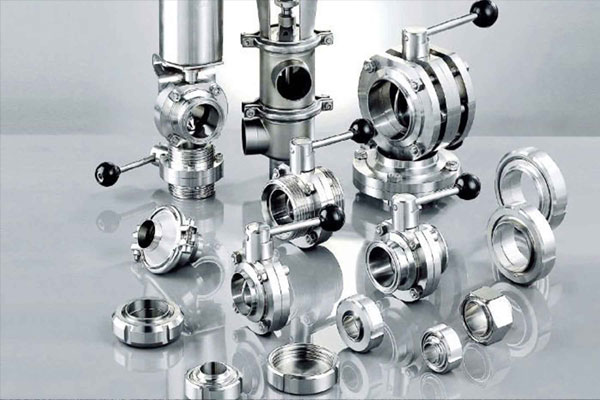
The regional dynamics deserve particular attention:
- Manufacturing Migration: The transfer of production capacity from the Global North to Asia-Pacific nations
- Resource Control: Strategic positioning of valve manufacturing near extraction sites and shipping routes
- Labour Arbitrage: Exploitation of wage differentials to maximise profit margins
- Environmental Displacement: Shifting pollution and resource depletion to regions with weaker regulatory frameworks
- Technological Dependence: Creating supply chain vulnerabilities that can be weaponised during geopolitical tensions
The Petrochemical Nexus
Singapore’s petrochemical ambitions illuminate the broader trajectory of industrial valve applications. The convergence of oil and gas processing with advanced manufacturing creates what might be termed an “extraction-production complex”—a system where pipeline components and industrial fittings become instruments of both wealth generation and environmental destruction.
The specialised requirements of floating production storage and offloading (FPSO) vessels operating in ASEAN waters demonstrate how technical specifications serve geopolitical strategies. These installations represent floating fortresses of resource extraction that can be deployed wherever profit margins justify environmental risk.
The Automation Imperative
The integration of smart valve technologies and digital monitoring systems represents the latest phase in capitalism’s perpetual drive to eliminate human labour from production processes. Industry 4.0 initiatives promise to reduce operational costs whilst increasing managerial control over both machinery and workers.
This technological trajectory raises fundamental questions about the future of industrial employment. As Singapore’s manufacturing sector contributes more than 20% to GDP whilst employing only a fraction of the workforce, the nation exemplifies how advanced industrial societies can maintain high output with minimal human input.
Environmental and Social Consequences
The environmental impact of the valve and fitting industry extends far beyond manufacturing facilities. Each component represents embedded carbon, extracted materials, and industrial processes that contribute to climate change and ecological destruction. The fundamental contradiction between infinite growth and finite resources remains unresolved.
The human cost proves equally troubling. The concentration of manufacturing in regions with weak labour protections enables cost reductions that benefit consumers in wealthy nations, whilst imposing hardships on workers in production centres.
The Geopolitics of Standards
International standards for valve manufacturing create a seemingly technical framework that conceals profound political implications. The requirement for regional compliance with different certification systems serves as a non-tariff barrier that advantages established manufacturers while excluding competitors from emerging economies.
When Singapore adopts international standards for its 20% share of global semiconductor equipment output, it signals alignment with Western technological hegemony whilst positioning itself as a reliable partner for multinational corporations seeking stable production platforms.
Future Trajectories and Systemic Risks
The trajectory toward renewable energy infrastructure creates new demand patterns for valve technologies whilst preserving existing power structures. Solar, wind, and hydropower projects require sophisticated flow control systems, yet the ownership and control of these technologies remain concentrated among the same corporate entities that have dominated the fossil fuel industries.
The emergence of green hydrogen facilities and biofuel production units represents what might be termed “greenwashed extraction”—new forms of resource exploitation disguised as environmental solutions.
The Challenge of Democratic Control
The centralisation of valve manufacturing in strategic locations like Singapore creates systemic vulnerabilities that extend beyond supply chain disruptions. The concentration of technical expertise and production capacity in a limited number of nodes enables both corporate and state actors to exercise disproportionate influence over global industrial systems.
Democratic governance of these essential systems requires public understanding of their political and economic significance.
Conclusion
The global valve and fitting industry represents a microcosm of contemporary capitalism’s fundamental contradictions. While these components enable the efficient flow of resources and energy that modern society requires, they also facilitate the concentration of power and wealth that characterise our current economic system. As companies like Hydratech continue to develop increasingly sophisticated fluid control technologies, the challenge remains to ensure that these innovations serve human needs rather than merely maximising shareholder returns. The future of industrial development depends not on the technical specifications of valves and fittings, but on our collective ability to democratise control over the systems that govern resource distribution and environmental impact across the global economy.
